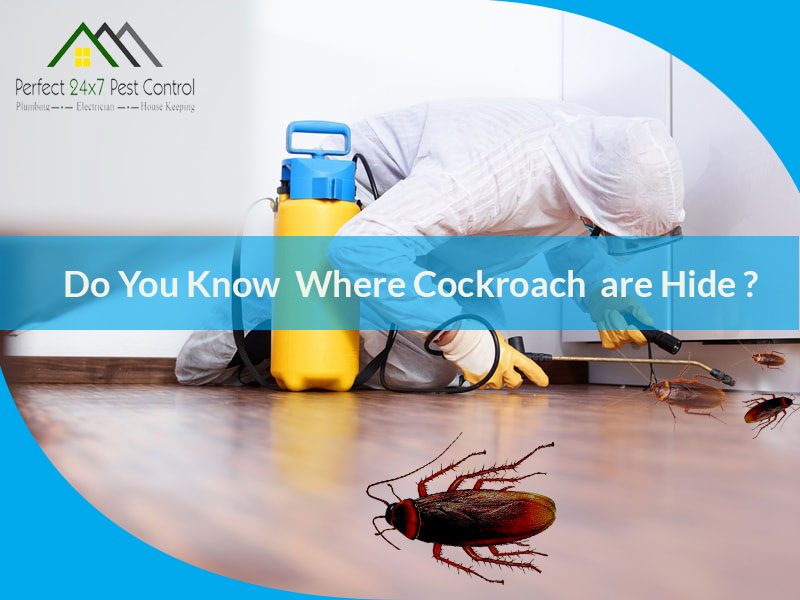
Do You Know The Hiding Place of Cockroach !!

Cockroaches! That name always leaves many people with goosebumps, and unfortunately, these disgusting creatures are pros at hiding. You can refer them to as the acrobats of the insect world thanks to their ability to crawl so fast and squeezing through cracks and holes which even a dime couldn’t fit in. They are not only disgusting, but they also carry disease-causing pathogens and seem to pop up only when you have visitors around, and that is usually not a welcoming sight. So if one happens to pop up in your house then chances are you have an army of them, so it’s time you start taking action by finding out where they hide.

Fortunately, you don’t have to get gray hairs because below is a list of the common places that cockroaches hide in a home.

Start looking in the kitchen

The kitchen has always been a haven for cockroaches. It provides the warmth, water and also plenty of leftover foods which can last these pests for as long as they live which is about six months. And the sad thing is that they are experts at hiding thanks to their extra sensitive antenna which detect minute vibrations caused by any movement and hence the moment you step in your kitchen they all scuttle into hiding.

So the first place you need to check is in your kitchen specifically in the parts listed below:

  • Appliances – Appliances such as a fridge, microwave, dishwasher, toasters provide the ideal conditions for roaches. Additionally, they can hide behind the motors of these appliances and feed on the leftovers especially if you do not clean your kitchen appliances thoroughly, so this is one of the many hiding places a cockroach has
  • Cabinets – Kitchen cabinets are often dark which is also another ideal condition for roaches and most of the time your food supply is kept there so why won’t Mr. cockroach hide here
  • Sinks – Sinks have sufficient moisture which is also an ideal condition for roaches’ survival
  • Ceiling – Yes, ceilings. Chances are that one is hanging over you now and if anyone happens to fall through it, then you may have an army of them flying down on you. Ceilings are often dark and also warm due to the warmth coming from the rooms below. They are also moist most of the time, and so offer ideal hiding places for roaches. Additionally, they are not often accessed, and they can easily escape when someone lights a flashlight in there. So if you notice cracks in your ceiling, then this is where they come from during the night and go back when it starts to get lit.
  • Pipes – If you get creeped out by brown and black wings and bodies of cockroaches then chances are you will get even more creeped out when you see a wet one. Unfortunately, if you have leaking pipes or pipes that run in the dark with open faucets, then you might be seeing wet roaches soon. Reason being pipes are moist which is an ideal condition for the growth of mold which they feed on. Moreover, they are dark and have enough water so why wouldn’t they be comfortable. They have food, water, and darkness. So if you happen to see a wet roach crawling in your apartment, then it’s time you call your plumber to check for leaks and also have pipes between walls insulated and gapped to get rid of them.
  • Furniture – If you thought that your cozy couch is comfortable only for you only sorry to let you know because cockroaches get the same feeling from them too. So if you drop food on the couch and do not bother to wipe, then you are adding even more to the fun of cockroaches. The soft materials and fabric on armchairs provide tight and dark spaces which they can climb in and hide until you retire to your bedroom and live the house to them.
  • Bookshelves – If you are a book lover then sorry to break this news to you, but there are cockroach species which feeds on paper and book bindings. Also because a bookshelf has a lot of books put together and even when you need to read you always pick one not all, it provides sufficient darkness and enough hiding space. So take out all your books and inspect the pages to see whether they are torn and also whether there are any roach eggshells in them or the shelf itself.
  • Wall décor – If you don’t often move your clock, picture frames or other wall art pieces then you are providing an excellent spot for a roach to hide during the day as it waits for you to flick the switch so it can come out

Other hiding places:

  • Attics
  • Basements
  • Trim and molding

Conclusion

In a nutshell, cockroaches are highly sensitive insects and once one shows, then chances are you have more of them than you expect (see our cockroach pest control services). They are averse to darkness and will scuttle away as soon as you turn the lights on.  Besides the places listed above a roach can hide anywhere as long as it has the ideal conditions. To prevent embarrassment and disease, take action as soon as you notice one
Free Home [Pest Control] Advices:-

As the flowers begin to bloom and the weather takes a turn for the better, homeowners will start to make to-do lists to help them tackle their spring cleaning. While dusting and sweeping are par for the course, our spring cleaning advice is for homeowners to make sure to also incorporate proper pest-proofing into their deep clean during the spring. Although summer pests may seem like just a nuisance, warm weather invaders like flies and termites can pose serious threats to people and property alike. To ensure your home is properly prepared for the season ahead, see below for the pests that could pose problems during the summer and how to keep them out for good.

Our Spring Cleaning Advice for a Pest-free Home

Ticks

Ticks pose serious health threats to humans and animals, as they are known for transmitting diseases such as Rocky Mountain spotted fever and Lyme Disease. These pests typically hide out in tall grass or shrubbery and alongside roads or trails waiting for a host to walk by, so be sure to keep your yard well maintained and mowed. It is important that you remove a tick as soon as it is spotted on your body to reduce your chance of contracting a disease. You can lessen the chances of bringing ticks into your home by wearing long sleeves and pants when outdoors, as well as insect repellent with at least 20 percent DEET.

Fleas

While fleas are known best for irritating pets like cats and dogs, these annoying pests can also bite and transmit diseases to humans. Fleas can cause allergic dermatitis and can transmit the rare bubonic plague as well as tapeworm to pets. Our spring cleaning advice for keeping fleas out of your home and off your family and pets is to maintain a clean home by frequently vacuuming and washing bed linens regularly. Outdoors, yards and lawns should be kept well-groomed since fleas prefer to hide in tall grass. Fleas typically travel upon rodents, so eliminate any rodent harborage sites such as overgrown shrubs or trees. Pet owners should perform flea checks after pets have been outside, bathe and groom them regularly, and visit a veterinarian annually.

Termites

Termites begin to swarm in early spring when the weather gets warmer, putting homeowners at serious risk. In the U.S., termites cause more than approximately $5 billion in property damage each year. Subterranean termites are known to cause the most damage with their saw-toothed jaws, while Formosan termites are the most aggressive, able to quickly reproduce and wreak havoc. Look to reduce humidity and moisture buildup around the home through proper ventilation of crawl spaces, attics, and basements to avoid attracting termite swarms. Additionally, storing firewood at least 20 feet away from the home and keeping mulch at least 15 inches from the foundation of your home is a good way to keep termites out.

Ants

More than 20 different ant species are known to infest homes, schools and businesses. Although ants may seem like just a nuisance, they pose real threats such as food contamination and costly property damage. Our spring cleaning tip is to keep ants out this spring by sealing cracks and crevices that allow entry into your home. Prevent ants from getting into the kitchen by disposing of trash regularly and keeping all sweets in closed containers. Additionally, eliminate moisture or standing water near the home and keep tree branches and other plants cut back from the house, as ants often use these as highways into the home. 

Flies

House flies contaminate food surfaces by spreading disease organisms picked up on their legs and mouths when feeding on trash, feces and other decaying substances. These common pests are known to transfer over 100 different pathogens, including typhoid and salmonellosis. House flies and fruit fliescan cause major headaches but are easily prevented with vigilant sanitation. Keeping kitchen counters clear of food and regularly removing trash in a sealed tight bag is the best way to prevent flies. Make sure to repair any visible rips or tears to mesh screens around the home, and apply any as needed to windows and doors to prevent fly entry.

Cockroaches

Cockroaches pose serious health risks, as they’re known to spread illnesses such as E. coli and Salmonella, and can also trigger asthma and allergy symptoms. If you find one cockroach in your home, it’s likely there are many more hiding in the cracks and crevices. Just like many other pests, cockroaches are attracted to moisture and food sources. Vacuum frequently and store your food in airtight containers to keep cockroaches out. In addition, seal any cracks or crevices around the home and eliminate moisture buildup in attics, basements and crawlspaces. Pay special attention to kitchens and bathrooms, as these areas are particularly vulnerable to cockroach infestations.

Bed Bugs

Bed bugs are one of the most common pests homeowners encounter, according to pest professionals. In fact, the National Pest Management Association’s 2018 Bugs Without Borders survey found that 97% of pest control professionals treated for bed bugs in the previous year. Although bed bugs do not transmit any diseases, their bites can become red, itchy welts and an infestation can be difficult to control once it takes hold. Be sure to properly inspect all furniture for tell-tale blood spots and shell casings, paying special attention to the seams of your mattress. Additionally, inspect areas where your pets sleep for any signs of an infestation. If you’re returning home from a spring vacation, make sure to inspect your suitcases outdoors before bringing them inside. Also, wash and dry all clothes on hot cycles, even those that have not been worn.

Thanks, guys

Perfect 24×7 pest control